Sunday, March 20, 2016

Adding Socialization Skills to Lesson Plans

Having fun lends an air of relaxation to learning and mastering new concepts. Even if your lesson plan does not include "fun", it can use socialization as a learning tool. Doing so is simple and places the responsibility for learning back onto shoulders of students.
Below are some ideas for using socialization skills as a learning tool in the classroom:
1. Pair students then have them choose one concept or skill from the daily lesson then explain it to their partner.
2. Use expert groups. Ask students to choose one small portion of the lesson to explain while in small
groups. Use a timer and rotate groups so that each group contains one expert per topic.
3. Have students sign up in advance to prepare a two-to-five minute lesson plan with an activity to introduce to peers. Use templates such as Share Your Knowledge to promote social learning. 
4. Use Comprehension Postcards. Take ordinary postcards and write one comprehension question per card on the postcards' backs. Use craft scissors, which make unusual designs, and cut the postcards in halves. If larger groups are needed, cut the postcards in thirds or fourths. Have students find their postcards' mates then discuss/answer the question listed on the back.


5. Get outside the classroom! Measure school buildings in math classes, go on creative writing excursions, or test hypothesis in science classes by heading outdoors. Head outdoors to teach prepositions with Preposition Walk.

6. Use butcher's paper or poster boards and have groups illustrate one important date from their history chapter. Then create student comic books with this easy to implement Comic Book Writing lesson! It comes with activity worksheets, great student examples, and step-by-step instructions.   

When students have fun learning, they engage with materials, use critical thinking skills, and look forward to coming to school. Happy students make for stress-free teachers!
Teaching is enjoyable with socialization learning activities!

Sunday, March 13, 2016

Celebrating Writing on St. Patrick's Day


There's nothing better than St Patrick's Day to implement new vocabulary and fun, educational writing activities! Get students interested in creating unique Irish stories by using story starters and word banks. Vocabulary word banks help emerging writers with categorizing, linking ideas, sequential ordering, vocabulary, and word choices. Students can use words banks, such as those written on shamrocks called St. Patrick's Day Story Starters, to practice and relate vocabulary words to specific cultures and traditions:

(Right click on image to download free handouts)


Begin your St. Patrick's Day educational, fun class time with FREE facts sheets and activities. First, learn about the history of the Irish holiday:

If you have students who need practice with motor skills and matching, try Wacky Wayne's St. Patrick's Day handouts. These activities help students to find similarities and differences, as well:


For younger readers, use phonetic sounds written on shamrocks to practice building words and putting consonants together with Shamrock Blended Consonant Phonetics Game:

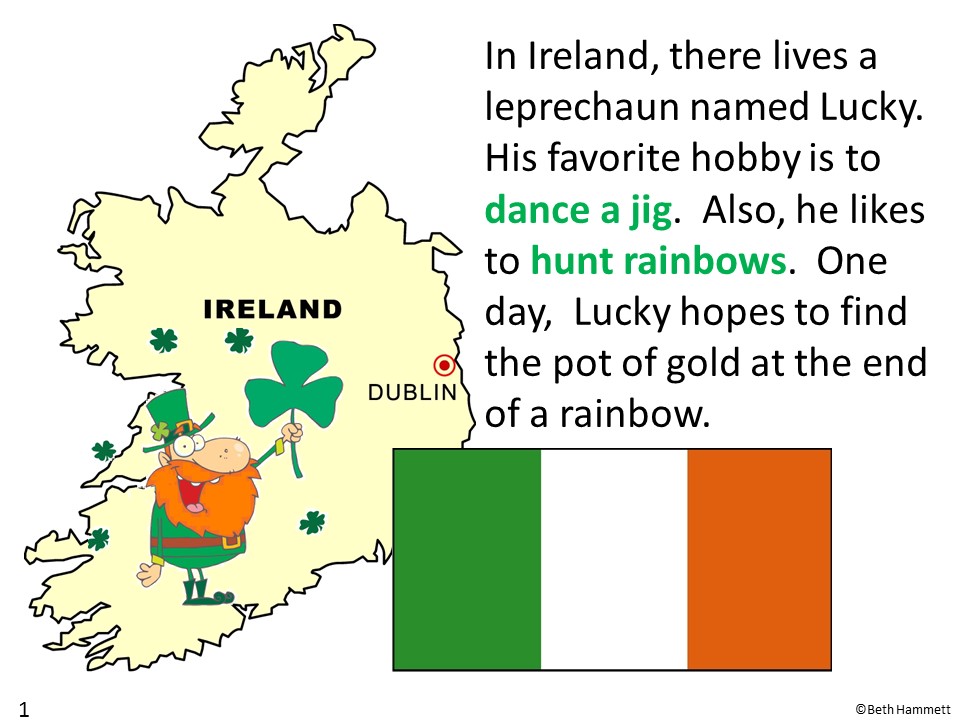
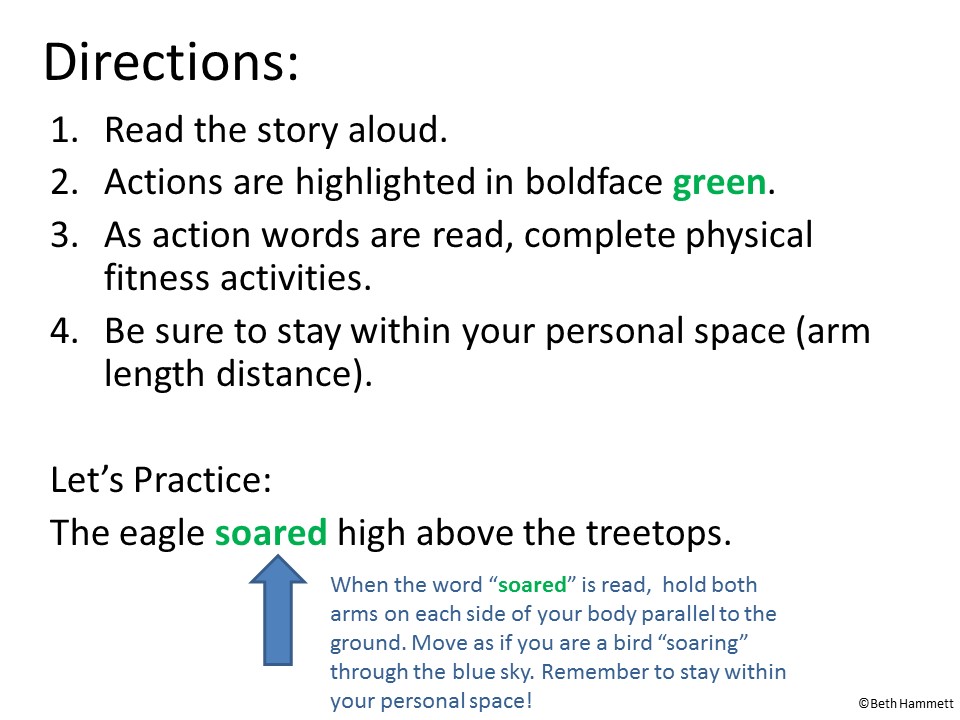
Build sight words and combine action verbs with exercise by reading "Lucky the Leprechaun Looks for Gold", a Get Fit Action Story. You can get the complete book FREE by reading my Teacher's Studio post from last week. Here's a short preview of it:


For upper elementary students who are ready to think about character traits, try My Pot o'Gold Character Traits. Introduce character traits to students then tie the concepts to real life with this pot o' gold activity. Students choose one character trait to define each of their classmates. Then, they write the character traits on gold coins, cut and paste onto peers' pot o' gold. This writing activity reinforces emotional intelligence skills by using positive character traits of classmates. 


As your St. Patrick's Day winds to an end, hand out a word search for some Irish vocabulary fun!
Holidays are the perfect time to celebrate writing! So, use St. Patrick's Day to learn about Irish culture, learn new Irish vocabulary, and write stories that incorporate Irish tradition.

Happy St. Patrick's Day!

Sunday, March 6, 2016

Women Scientists as Role Models

There's a national movement to get more female students interested and involved in STEM subjects. In order to do so,there needs to be more emphasis on female scientists who are role models. Ask your students to make a list of female scientists and their contributions. How many female scientists can students name? 

Here's a list of  Ten Famous Women Scientists:

Marie Curry
Barbara McClintock
Jane Goodall
Rita Levi Montalcini
Maria Mayer
Gertrude Elion
Rachel Carson
Elizabeth Blackwell
Rosalind Franklin
Christine Nusslean-Volhard
It's important for students to understand contributions made by female scientists. Therefore, the federal government and the Office of Science and Technology Policy has set up a website to help teachers incorporate STEM into lesson plans. Included are: fact sheets, news, reports, speeches, videos, and more. As more and more females choose STEM fields as professions, their contributions become recognized and celebrated.
Teach STEM and female scientists and contributions with these fun, engaging activities:


Try this STEM related activity: Columbia Shuttle Disaster and Activities.


Sunday, February 28, 2016

Get Fit on Snow Days

Record breaking snow falls are causing numerous school absences this year. It appears that Mother Nature has her own agenda this winter, and it includes plenty of snow days. How can elementary students keep learning and stay active when they are out of school? 
Step back in time to when you were a kid in grade school. We hollered and whooped when we saw our school district listed on the ticker that scrolled across the bottom of the television screen. Then, we turned our attention to the big picture window in our living room where large, white snowflakes floated to the ground. It seemed as if they begged for us to come out to play. After steaming mugs of hot chocolate and plates of cinnamon toast, we pulled on coats, gloves, and toboggans then headed outdoors. We found our sleds and met our classmates at the top of the hill.
 
We went down time after time until our fingers and toes were numb from the cold. 
 

Another great treat on snow days was snow ice cream! After the first snow fall of the year, we filled large bowls with clean, pure snow. We stirred in milk, sugar, and vanilla until the mixture was just right. Then, we gobbled up as much of the ice cream as our stomachs could hold. Afterwards, we'd plop down in front of the wall furnace for naps. It was clean, simple fun that provided lots of physical activity. 
Today, students have plenty of indoor technology options, such as gaming units and Netflix, to keep them busy and out of the cold temperatures. But, that means most students are getting little exercise on snow days. To change that, have students practice their inferencing, reading, and visualization skills using Get Fit Action Stories.
Get Fit Actions Stories are active learning tales that use sight words to get elementary students up and moving. Get Fit Action Stories will keep younger students learning and exercising on snow days! 


Stay warm and keep students active on cold weather days!
 
Here's a FREE Get Fit Action Story Lucky the Leprechaun Looks for Gold for St. Patrick's Day:


Sunday, February 21, 2016

Using Story Maps and Storytelling for Pre-Writing

Two of the best pre-writing strategies for students are story maps and
storytelling! These help students with planning, sequencing, and visualizing writing. Once students have completed story maps, they are ready to begin storytelling. For narrative writing, a simple, "I remember when..." can get the story rolling. For expository writing, try "Did you know...?"  These techniques encourage struggling writers to think through their stories before putting pencil to paper. Story maps and storytelling can alleviate writing fears and make the pre-writing process easier. 
One of the first steps is to ask students to complete story maps then narrow their topics. If the prompt is: Write about an important event in your life, begin with asking students to look at their maps and brainstorm 3-5 events from their lives that stand out to them.
For example:
  1. My grandpa taught me to fish
  2. My first day of school
  3. Learning to ride a motorcycle
  4. My trip to Washington, D.C.
  5. When my brother was born
Ask students to list beside each event the reason why it is important:
  1. My grandpa taught me to fish--learned to love fishing
  2. My first day of school--met lifelong friends
  3. Learning to ride a motorcycle--become independent
  4. My trip to Washington, D.C.--saw the country's history
  5. When my brother was born--no longer an only child
Now, narrow down the topics to write about to one: My trip to Washington, D.C. This is a very broad topic, so continue to narrow the subject matter:
           My trip to Washington, D.C.: Mount Vernon, Washington Monument, Vietnam Wall, Lincoln Memorial
Choose one of these to write about: Mount Vernon
Why is it important? I learned about everyday life in the 1700s. 
Brainstorm again by writing down everything you know about your topic: Mount Vernon: home of first U.S. president, working plantation, on the Potomac River, high on a hill, grain barn...
Finally, turn to a peer or small group and show where the story is/would exist on your story map. Now, tell the story of your trip to Mount Vernon. Ask for feedback from peers: which parts of the story need more, or less, details; are there parts that need clarification; are their parts of the story that do not need to be included? 
Now, you are ready to begin writing your rough draft! 
Making a story map, choosing a topic, verbalizing a story, and getting peer feedback can make the writing process simpler and less intimidating to students. Before your students begin writing, take time to complete story maps and gather thoughts and ideas.
This process will alleviate your students' writing fears!  
Right click to download FREE story maps:


Need more help with storytelling to writing? Try A Common Core Approach to Narrative Writing: From Storytelling to Writing